


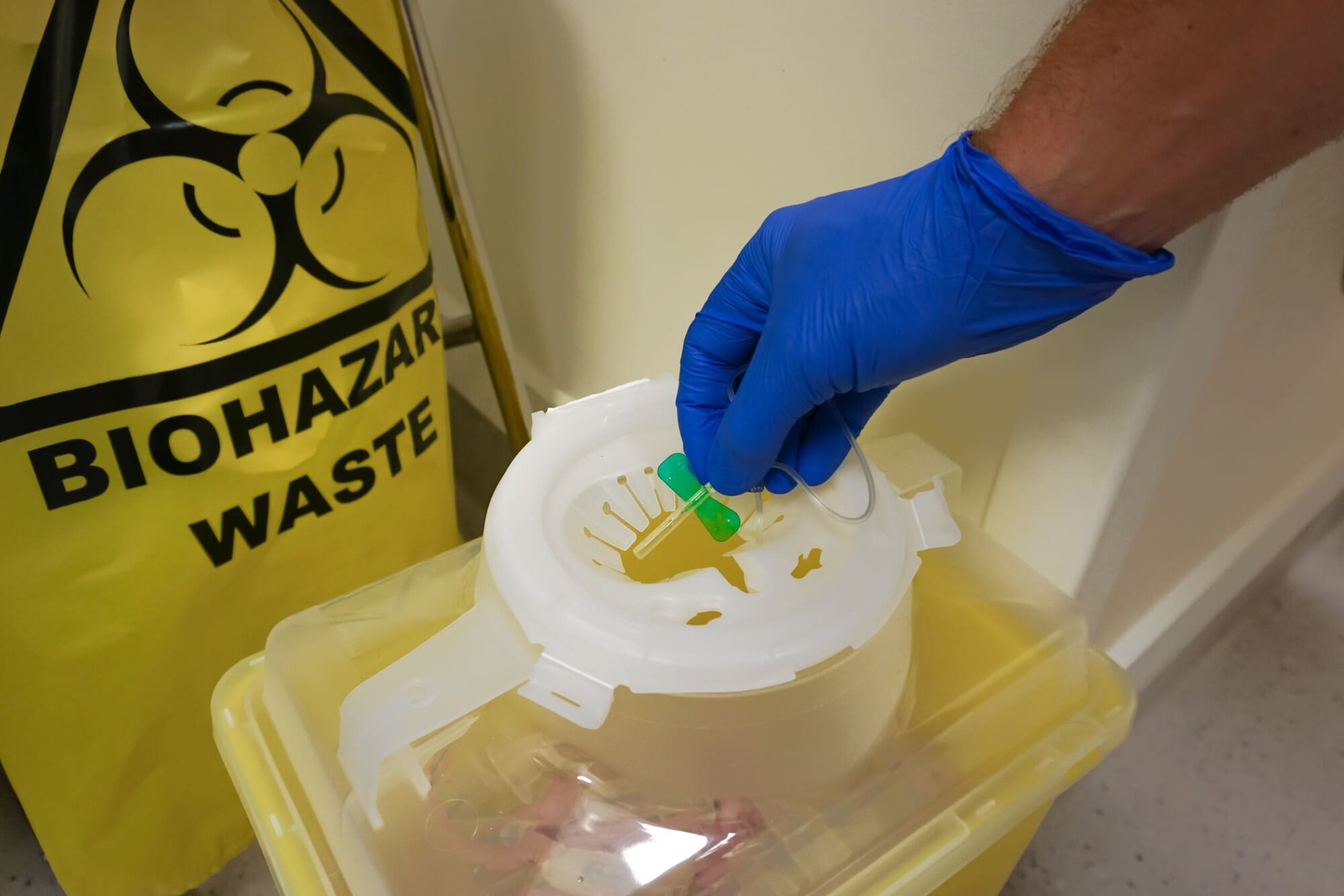
Healthcare and commercial environments generate sharp objects such as needles, syringes, and lancets that pose serious safety risks if handled improperly. Sharps container disposal, supported by professional providers like Medical Waste Pros, is designed to protect staff, patients, and the public from accidental needle-stick injuries and potential exposure to harmful pathogens. Proper disposal systems create a controlled process that minimizes contact and ensures waste is handled responsibly from start to finish.
Without structured disposal procedures, sharps waste can quickly become a health hazard, increasing the risk of injury, infection, and regulatory noncompliance.
What Qualifies as Sharps Waste
Sharps waste includes any object capable of puncturing skin and causing injury. Common examples include:
- Hypodermic needles and syringes
- Lancets and blood collection devices
- Auto-injectors
- Broken glass contaminated with medical substances
Because these items can carry bloodborne pathogens, they must be disposed of using approved containers designed to prevent leaks, punctures, and accidental exposure.
Safe Handling Practices for Sharps Containers
Safe handling begins at the point of use. Sharps should be placed immediately into designated containers without recapping, bending, or removing needles. Containers must be clearly labeled, puncture-resistant, and securely closed when full.
Using proper sharps container disposal procedures helps ensure waste is isolated and managed correctly. Containers should never be overfilled, as this increases the risk of injury during handling or transport. Staff training and clear protocols play a key role in maintaining a safe environment for everyone involved.
The Importance of Compliance in Medical Waste Disposal
Regulatory compliance is a critical aspect of medical waste management. Facilities are required to follow specific guidelines for the collection, storage, transport, and disposal of sharps waste. Failure to comply can result in fines, legal issues, and reputational damage.
Professional disposal services ensure that sharps waste is handled according to established standards. Documentation, tracking, and secure transport processes help facilities demonstrate compliance and maintain accountability throughout the disposal cycle.
Protecting the Public and the Environment
Improper disposal of sharps waste doesn’t just affect healthcare workers—it poses risks to waste handlers, sanitation workers, and the general public. Discarded sharps can cause injuries long after they leave a facility if not handled correctly.
Effective sharps container disposal prevents needles and other sharp objects from entering landfills or public waste streams. Secure containment and proper treatment reduce environmental contamination and support safer communities.
Benefits of Professional Sharps Disposal Services
Using professional services simplifies the disposal process and reduces internal workload. These services provide appropriate containers, scheduled pickups, and secure disposal methods that align with safety and compliance requirements.
Facilities benefit from consistent procedures, reduced liability, and peace of mind knowing sharps waste is handled responsibly. This allows healthcare providers and businesses to focus on their core operations without compromising safety.
Conclusion
Safe and effective medical waste management depends on proper handling of sharps. By following structured sharps container disposal practices, facilities can protect staff, patients, and the public from injury and contamination. Secure containers, compliant procedures, and professional disposal services work together to reduce risk, support regulatory requirements, and promote a safer environment. Responsible sharps disposal is not just a regulatory obligation—it is a vital component of public health and workplace safety.
