


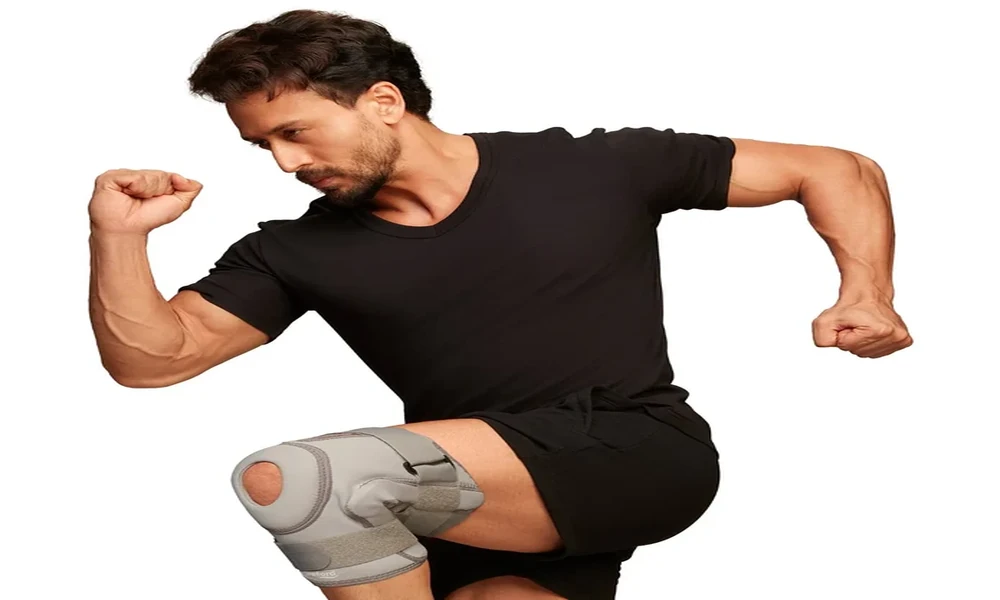
The knee is literally the most important joint in the body. As knees bear the body’s weight and help in walking, climbing stairs, sitting, running, and performing other daily activities.
It is because the knee actually varies on a combination of bones, ligaments, muscles, tendons, cartilage as well as soft tissues. An injury or weakness in any of these structures can affect overall stability.
Feeling like your knee is buckling, shifting out of place or is not stable while moving around can totally make it difficult to perform tasks.
Using a hinged knee brace can literally help provide external assistance to the joint during movement.
In this blog, we will explain what a hinged knee cap is and how using it can restore joint stability.
What Is a Hinged Knee Cap?
A hinged knee cap refers to knee support worn on the knee, allowing it to bend and straighten. This literally makes the device different from a rigid immobilizer, which is generally intended to limit movement much more substantially.
Depending on its construction, a hinged support may include:
- Adjustable straps
- Side stabilizers
- Flexible or semi-rigid panels
- Padding around the knee
- Articulated hinges
- Compression sections
- Extension or flexion control mechanisms
Why Does Knee Joint Stability Matter?
Knee stability refers to the joint that can maintain appropriate alignment and controlled movement while supporting body weight. There are many structures contribute to this stability:
- Ligaments controlling excessive forward, backward and rotational movement.
- Muscles provide active support and help control movement.
- Tendons transmit force between muscles and bones.
- Cartilage aids in the smooth movement of joints and the distribution of load.
Instability can also be observed particularly in these situations:
- Walking on uneven surfaces
- Turning or changing direction
- Going downstairs
- Squatting
- Recreational activities
- Sports involving cutting or pivoting
How Wearing a Hinged Knee Cap Helps Restore Stability?
1. It Provides External Support
- A hinged knee cap creates an additional layer of support around the joint.
- This can be particularly useful when the muscles and soft tissues around the knee are not providing sufficient control.
2. It Helps Control Side-to-Side Movement
- Hinged side supports are designed to help control excessive movement in the frontal plane.
- The hinge allows controlled bending while the surrounding structure contributes resistance to unwanted lateral motion.
- This can provide a greater sense of security during walking and other functional activities.
3. It Allows Controlled Flexion and Extension
- The design of the hinged knee brace does not necessarily need to keep the knee completely straight.
- The knee can be bent and straightened, while the support helps guide the movement.
- This can make hinged supports suitable for situations where controlled mobility is desirable.
4. It Can Limit Excessive Movement
- After certain injuries, excessive translation or rotation may contribute to feelings of instability.
- A properly fitted hinged support can act as an external restraint.
- In some circumstances, this may reduce the amount of unwanted movement experienced during everyday activities.
5. It Can Improve Confidence During Movement
- External support of a hinged knee cap offers a feeling of security, which helps make controlled movement easier.
- Especially, during rehabilitation when gradually rebuilding confidence is an important part of returning to normal tasks.
Key Ways a Hinged Knee Cap Supports the Joint
| Support Function | How It May Help | Potential Benefit |
|---|---|---|
| Side-to-side control | Provides resistance around the sides of the knee | Improved sense of stability |
| Movement guidance | Allows controlled bending and straightening | More predictable movement |
| External restraint | Helps limit certain unwanted movements | Reduced feeling of instability |
| Compression and support | Surrounds and supports the knee area | Added comfort and awareness |
| Proprioceptive input | Provides sensory feedback around the joint | Greater awareness of knee position |
| Rehabilitation assistance | Supports controlled activity when prescribed | May help with gradual return to movement |
Hinged Knee Cap or Simple Knee Sleeve: Which One is Better to Use
| Features | Hinged Knee Cap | Simple Knee Sleeve |
|---|---|---|
| Side supports | Usually included | Usually absent |
| Mechanical stability | Greater potential for controlling certain movements | Primarily provides compression and sensory feedback |
| Range of motion | Designed to permit controlled movement | Generally unrestricted |
| Level of support | Moderate to high, depending on design | Light to moderate |
| Typical use | Instability and rehabilitation support | Compression, warmth, comfort, mild support |
| Adjustability | Often includes straps or adjustable components | Usually simpler |
| Fit requirements | More important because hinge alignment matters | Generally less mechanically complex |
Wrapping Up
With proper external support, a hinged knee cap may help promote an increased feeling of joint stability by limiting motion while allowing for a range of motion to occur in the knee.
Its hinges and supportive structure can help manage certain unwanted movements, while compression and sensory feedback may further improve awareness of the joint.
Maximum effect is often obtained by selecting the correct type of external support for the correct condition, providing a proper fit and a matching rehabilitation program.
To those experiencing persistent instability, excessive swelling, severe pain or frequent buckling or wobbling of the knee, they should actually get examined by a doctor.
At the end, the purpose of a hinged knee cap is not simply to limit movement. But also to support controlled movement while helping the knee function with greater confidence and stability.
